The online world offers the promise of speech with minimal barriers and without borders. New technologies and widespread internet access have radically enhanced our ability to express ourselves; criticize those in power; gather and report the news; and make, adapt, and share creative works. Vulnerable communities have also found space to safely meet,  grow, and make themselves heard without being drowned out by the powerful. The ability to freely exchange ideas also benefits innovators, who can use all of their capabilities to build even better tools for their communities and the world.

In the U.S., the First Amendment grants individuals the right to speak without government interference. And globally, Article 19 of the International Covenant on Civil and Political Rights (ICCPR) protects the right to speak both online and offline. Everyone should be able to take advantage of this promise. And no government should have the power to decide who gets to speak and who doesn’t.

Government threats to online speakers are significant. Laws and policies have enabled censorship regimes, controlled access to information, increased government surveillance, and minimized user security and safety.

At the same time, online speakers’ reliance on private companies that facilitate their speech has grown considerably. Online services’ content moderation decisions have far-reaching impacts on speakers around the world. This includes social media platforms and online sites selectively enforcing their Terms of Service, Community Guidelines, and similar rules to censor dissenting voices and contentious ideas. That’s why these services must ground their moderation decisions in human rights and due process principles.

As the law and technology develops alongside our ever-evolving world, it’s important that these neither create nor reinforce obstacles to people’s ability to speak, organize, and advocate for change. Both the law and technology must enhance people’s ability to speak. That’s why EFF fights to protect free speech - because everyone has the right to share ideas and experiences safely, especially when we disagree.

Free Speech Highlights

Free Speech is Only as Strong as the Weakest Link

From Mubarak knocking a country offline by pressuring local ISPs to PayPal caving to political pressure to cut off funding to WikiLeaks, this year has brought us sobering examples of how online speech can be endangered. And it’s not only political speech that is threatened – in the United...

A person holding a megaphone that another person speaks through

Section 230

47 U.S.C. § 230The Internet allows people everywhere to connect, share ideas, and advocate for change without needing immense resources or technical expertise. Our unprecedented ability to communicate online—on blogs, social media platforms, and educational and cultural platforms like Wikipedia and the Internet Archive—is not an accident. Congress recognized that...

Free Speech Updates

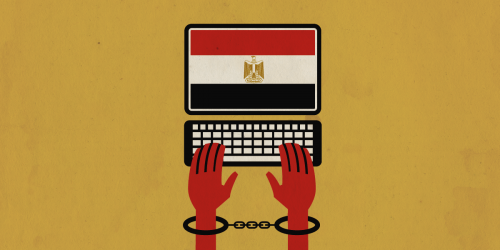
shackled hands on keyboard, with Egypt flag

EFF Condemns Egypt's Latest Crackdown

We are quickly approaching the tenth anniversary of the Egyptian revolution, a powerfully hopeful time in history when—despite all odds—Egyptians rose up against an entrenched dictatorship and shook it from power, with the assistance of new technologies. Though the role of social media has been hotly debated and often overplayed,...

Free Speech banner, an colorful graphic representation of a megaphone

ICANN Can Stand Against Censorship (And Avoid Another .ORG Debacle) by Keeping Content Regulation and Other Dangerous Policies Out of Its Registry Contracts

The Internet’s domain name system is not the place to police speech. ICANN, the organization that regulates that system, is legally bound not to act as the Internet’s speech police, but its legal commitments are riddled with exceptions, and aspiring censors have already used those exceptions in harmful ways. This...

EFF Urges Universities to Commit to Transparency and Privacy Protections For COVID-19 Tracing Apps

San Francisco—The Electronic Frontier Foundation (EFF) called on universities that have launched or plan to launch COVID-19 tracking technologies—which sometimes collect sensitive data from users’ devices and lack adequate transparency or privacy protections—to make them entirely voluntary for students and disclose details about data collection practices.Monitoring public...

Pages

Back to top

JavaScript license information